
Treatment Plant
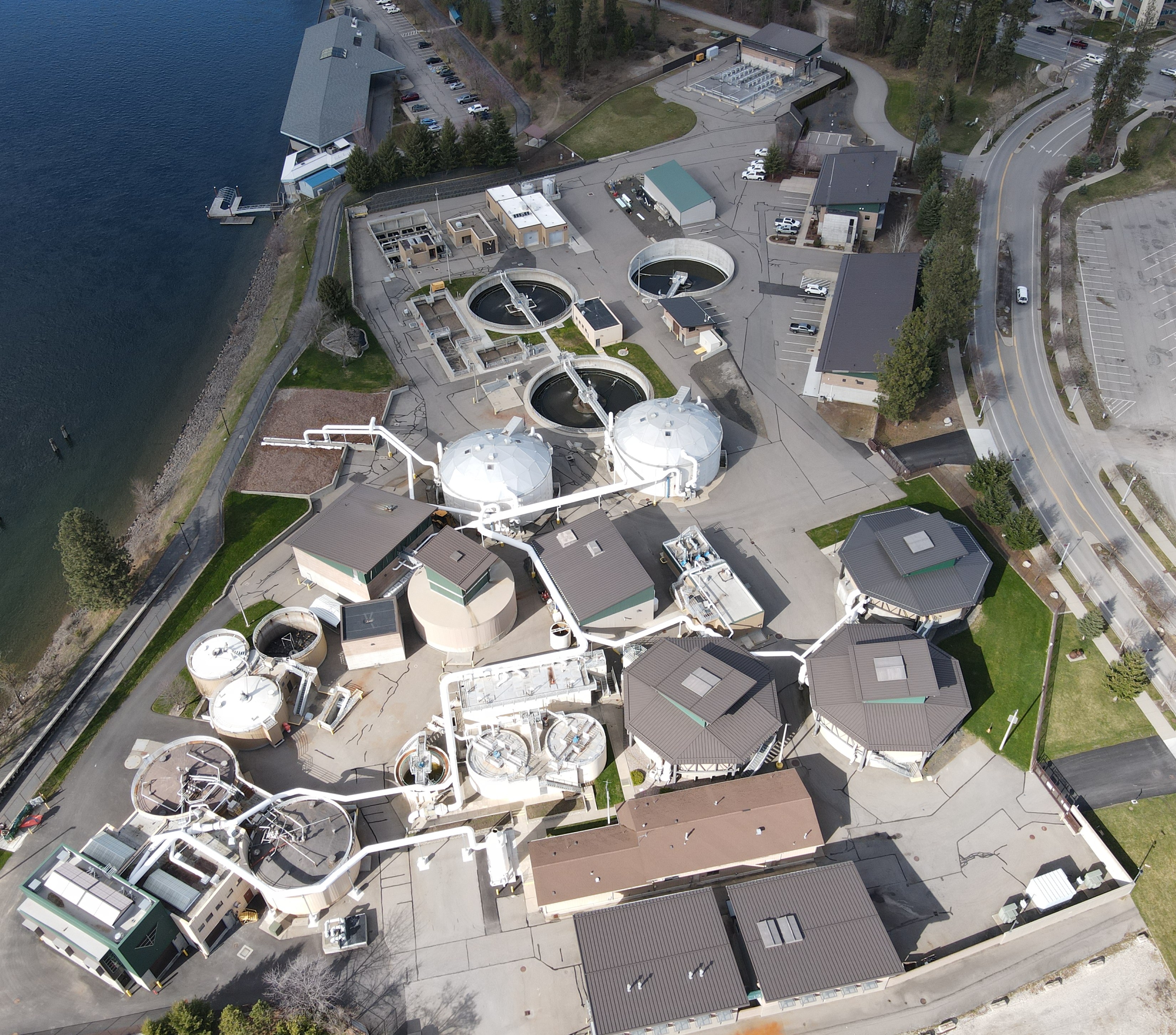
While secondary-level municipal treatment was mandated by the Clean Water Act of 1972, it was operational in Coeur d’Alene in 1939; making it one of the first such municipal plants in the world. The city has always utilized conventional primary clarification and fixed-film “trickling filters” as the secondary treatment process followed by chlorination.
Beginning in 1982, the plant has undergone 11 major “phases” of construction, culminating with solids handling and administration buildings.
These projects added, new anaerobic digesters, sludge gravity thickeners, belt filter presses for biosolids de-watering, plastic-media trickling filters with solids contact tanks, secondary clarifiers, a chlorine contact tank, de-chlorination with sulfur dioxide, a chemical systems center for phosphorus removal and foul air treatment with compost-bed biofilters. Some of the original 1939 structures are still used today.
While the city has about $73 million invested in its treatment plant alone, customer rates have stayed competitive with other communities.
In the Lab:
Our chemist and two analysts perform over 700 tests per month for permit compliance and process control. In addition they sample the river weekly and record weather observations. The chemist also conducts the industrial pretreatment program that regulates the discharge of commercial and industrial customers into the city’s collection system.
Wastewater Utility Facts
Collection System: 250 miles of pipe, 4400 manholes and 10 “lift stations".
Treatment Plant: Primary Trickling Filter/Solids Contact ® Secondary Clarification ® Disinfection/De-chlorination.
Performance:
Average BOD Removal = 99.5% (Required 85%)
Average Total Suspended Solids Removal = 100% (Required 85%)
Average Summer Phosphorus Removal = 99% (Required 85%)
Average Daily Summer Ammonia Treatment = 1020 pounds
Population Served = 43,000
Number of Customers (Accounts) = 17,900
Average Daily Sewage Per Person = 65 gallons per day
Chemical Cost Per Day for Phosphorus Removal = $750.00
Chorine Used Per Day = 60 Pounds
Sulfur Dioxide Used Per Day = 20 Pounds
Annual Plant Gas & Electric Bill = $449,200
Average Daily Dry-Weather Flow = 3.8 million gallons per day
Maximum Peak Daily Flow Capacity = 6.3 mgd
Nominal Design Flow Without Nitrification = 5 mgd
Staffed 7 days a week; 8 hours a day; 365 days a year.
Compost: Aerated Static Piles with Aerated Curing. 21 Days in Piles Followed By 30 Days of Curing.
Total Utility Staff = 7 plant operators; 2 plant mechanics; 6 collection operators; 1 Field Inspector; 3 lab analysts; 2 compost operators; 5 administrative staff & project managers
Typical annual revenues = $20.3 million or 27% of a total city budget of $76.4 million.
Typical annual expenditures = $15.5 million or 23% of a total city budget of $66.6 million.
Hours
Mon — Fri 7:00 a.m. - 3:30 p.m.